
Convoy of Mercy: Ambulances Arrive in East Ukraine
Ambulances Arrive in East Ukraine
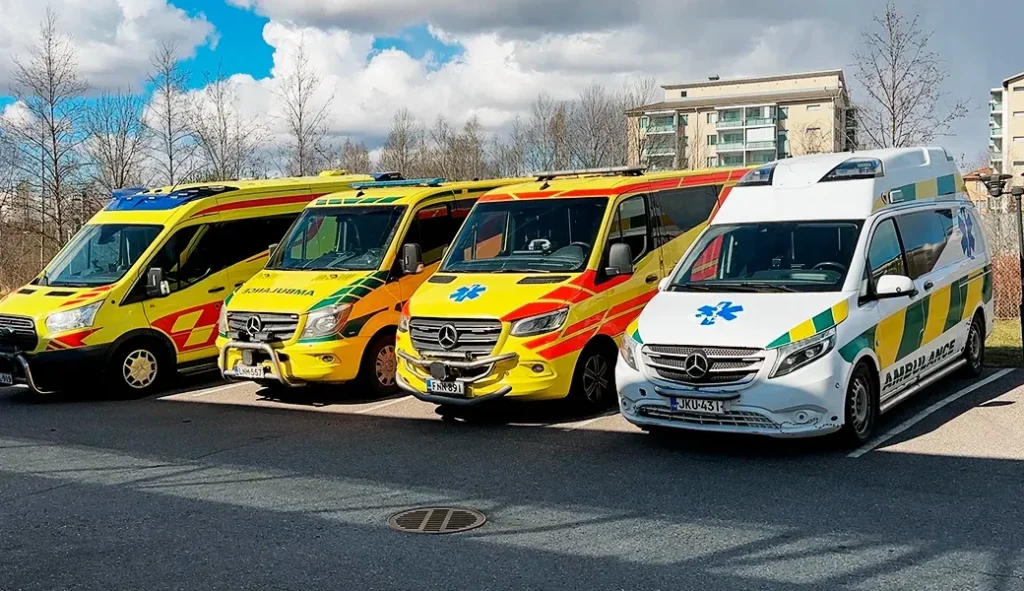
The intense bombings of recent days have led to increased emergency levels in Ukraine, and have once again risen to the forefront in headline news. In response to this emergency, we delivered another five fully equipped ambulances and two off-road vehicles at the beginning of June, destined to save fathers and sons serving in the war zone.
One of the ambulances was delivered to the Kyiv Central Hospital in the capital city of Ukraine, by special request, equipped with resuscitation equipment. The remaining ambulances continued onward to Kharkiv and Zaporizhzhia.
Every minute counts to save a life... and to return a loved one back home to their family.
Mayor Behind the Wheel
We had volunteers driving the ambulances. The convoy traveled through the Baltic states and Poland before reaching where the need was most urgent.
Among the drivers was the Mayor of Kerava in Finland, who stated: “When I was asked whether I would like to use my free weekend to drive an ambulance to Poland, I did not hesitate for a moment. This is my way of helping and showing that the people of Ukraine who are in distress are close to my heart.”
Helping to Save Up to 200 Lives Every Month
This past winter, five ambulances were also procured and sent to deliver vital aid and medical support. The value of these vehicles cannot be overstated near the front lines, where rapid evacuation for urgent medical care is bar none.
Aid work, all the while, has become increasingly dangerous. The impact of a single ambulance delivered to the war zone is immense: it can help save up to 200 lives each month—nearly 2,400 a year. With the 10 ambulances GCMM has delivered to date, the potential impact reaches almost 24,000 lives annually.
Artem Kolosov, Chief Surgeon of a Hospital in the Zaporizhzhia Region
“Many injuries occur when people try to avoid munitions dropping from drones during transport.” The hospital performs many amputations as well as operations on the chest and abdominal areas. Many among the patients are victims of shrapnel injuries. Patients arrive at the hospital from five different locations, with approximately 20–30 patients per day coming from each site. Due to limited capacity, only the most serious cases are treated. The Zaporizhzhia Regional Hospital receives an average of 100–150 wounded soldiers each day.
We thank you for the support you have shown for Ukraine. Without your support, the convoy of ambulances at this scale would not have been possible. Together, we continue to bring aid to areas and people in desperate need.