
Bringing God’s Word to Nepal: 2,000 New Testaments for Christmas
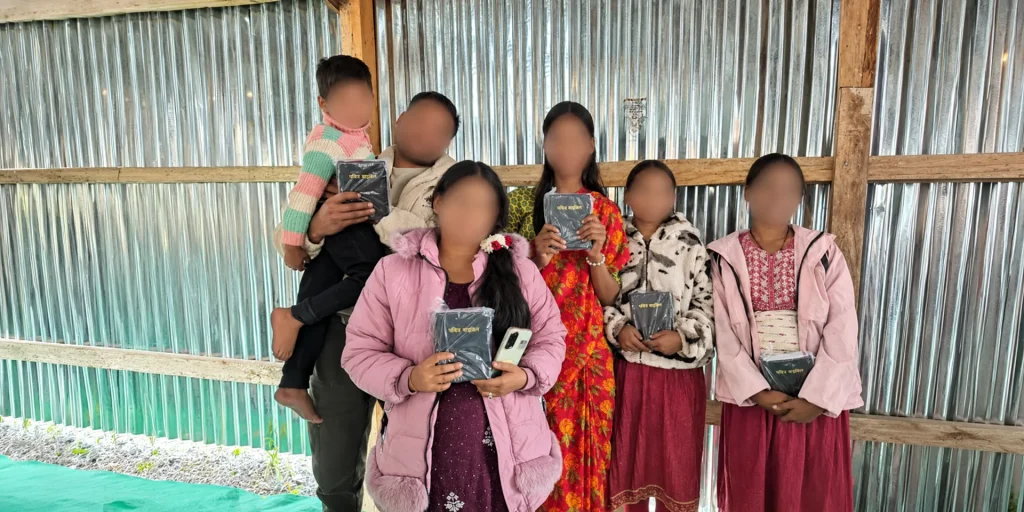
A request has reached GCMM from Kathmandu, Nepal, and it is both urgent and heartwarming: can we help get 2,000 Maithili-language New Testaments to 30 churches before Christmas?
Think of a Bible passage you turn to when life gets hard. It might be a promise that gave you peace, or words of Jesus that carried you through a difficult season.
GCMM’s ministry partners in Kathmandu wrote to us about bringing New Testaments into Nepal: “The immediate need is for just over 2,000 New Testaments. Would GCMM be able to help?”
GCMM CEO and founder Hannu Haukka replied without hesitation:
“Of course we’ll help!”
— Hannu Haukka, GCMM CEO and founder
Your help could put God’s Word into the hands of many more people, in their own language.
Until now, getting Maithili-language New Testaments to people has been hard, since the books are printed in Delhi, India. Our partners in Nepal now have the chance to bring in a shipment before Christmas.
God’s Word brings comfort and hope that no one can measure. But for many people, receiving that encouragement comes down to something practical: a Bible they are able to read in their own language.
Meet the Maithili People
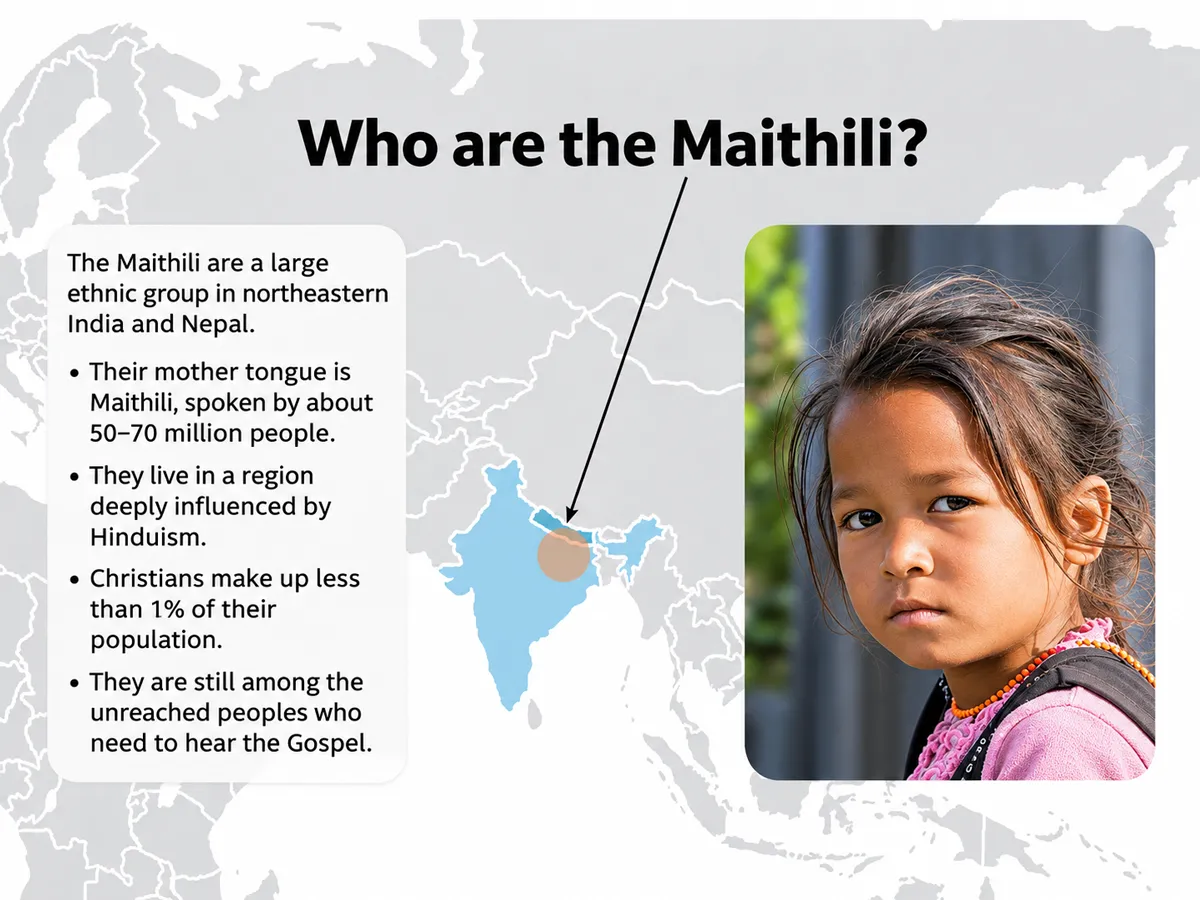
The Maithili are a large ethnic group in northeastern India and Nepal.
- Maithili is their native language, spoken by roughly 50–70 million people.
- Their region is strongly shaped by Hinduism.
- Fewer than 1% of Maithili people are Christians.
- They are still among the people groups largely unreached by the Gospel.
The Prince of Peace in Their Own Language
We pray for peace for people and nations torn by war, and for families to be safe. Even amid fear and uncertainty, we pray they will be able to look ahead with hope again.
Now, more than ever, people need to hear about God’s peace. Jesus Christ is the Prince of Peace foretold in Isaiah 9:6, and He promised His disciples:
“Peace I leave with you; my peace I give you.” (John 14:27)
This message of peace never replaces food, shelter, or safety. Alongside those needs, though, we want to share God’s love, forgiveness, and hope. It is a message for every nation, including the Maithili-speaking people of Nepal.
Your own time in the Bible may help you see why this request matters. When Scripture is in a person’s own language, they can pause to reflect, ask questions, study, and pray, then return to the same passages again and again, alone or with family and church.
We believe God speaks through His Word and that the Holy Spirit works in the hearts of readers. That is why we are glad to help put the New Testament within reach, so that people can get to know Jesus for themselves and grow in their faith.
Years of Work in Nepal
GCMM first connected with the Maithili-speaking people in 2011–2012, during a Mega City Media Campaign. One lasting fruit of that work is the Maithili-language Superbook, translated and produced through GCMM to share Bible stories with children in their own language. GCMM’s partners are still working with local communities, and getting New Testaments to churches is the next step.
Printed books have always been part of GCMM’s outreach. A television program ends and a conversation passes, but a book can be picked up again whenever someone wants answers, encouragement, or a deeper look at who Jesus is.
How You Can Help Before Christmas
The goal is to provide 2,000 Maithili-language New Testaments to 30 churches.
A gift of $35 can provide 10 copies of the New Testament, and every gift of any size helps us answer this urgent request.
Christmas is a reminder that God came near to us in Jesus Christ.
This Christmas, your gift can help carry the message of the Prince of Peace to families and churches across Nepal. Together, we can put God’s Word in more hands, in their own language.